
• Skip to primary navigation
  • Skip to main content
  • Skip to primary sidebar
  • Skip to footer
webrtcHacks

webrtcHacks

guides and information for WebRTC developers

  • Home
  • Livestream
  • About
    • Chad Hart
    • Philipp Hancke
  • Subscribe
  • Merch
  • Contact
  • Show Search
Hide Search

VP9

Reverse-Engineering av1, Google Meet, k-SVC, SVC, VP9, webrtc-internals

The Hidden AV1 Gift in Google Meet

Earlier last week a friend at Google reached out to me asking Does Meet do anything weird with scalabilityMode? Apparently, I am the go-to when it comes to Google Meet behaving weirdly :). Well, I do have a decade of history observing Meet’s implementation, so this makes some sense! It turned out that this was […]

Philipp Hancke · December 19, 2023

Reverse-Engineering Blackbox Exploration, Duo, e2ee, google, Google Meet, Opus, ssltcp, VP9, webrtc-internals

Meet vs. Duo – 2 faces of Google’s WebRTC

A very detailed look at the WebRTC implementations of Google Meet and Google Duo and how they compare using webrtc-internals and some reverse engineering.

Gustavo Garcia · June 15, 2022

Technology Brief, gustavo garcia, sergio murillo, sfu, SVC, VP9

Chrome’s WebRTC VP9 SVC Layer Cake: Sergio Garcia Murillo & Gustavo Garcia

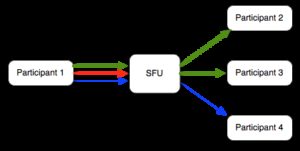
Multi-party calling architectures are a common topic here at webrtcHacks, largely because group calling is widely needed but difficult to implement and understand. Most would agree Scalable Video Coding (SVC) is the most advanced, but the most complex multi-party calling architecture. To help explain how it works we have brought in not one, but two WebRTC video architecture experts. […]
Sergio Garcia Murillo · February 14, 2017

Technology Brief, MCU, sfu, simulcast, SVC, VP9

Optimizing video quality using Simulcast (Oscar Divorra)

Dealing with multi-party video infrastructure can be pretty daunting. The good news is the technology, products, and standards to enable economical multiparty video in WebRTC has matured quite a bit in the past few years. One of the key underlying technologies enabling some of this change is called simulcast. Simulcast has been an occasional sub-topic […]

Chad Hart · June 16, 2016

Primary Sidebar

  • Sponsored. Become a webtcHacks sponsor

Email Subscription

Subscribe to our mailing list

* indicates required
webrtcHacksguides and information for WebRTC developers

Footer

SITE

  • Post List
  • About
  • Contact

Categories

  • Guide
  • Other
  • Reverse-Engineering
  • Review
  • Standards
  • Technology
  • Uncategorized

Tags

apple Blackbox Exploration Brief Chrome code computer vision DataChannel debug e2ee Edge gateway getUserMedia Google Meet ICE ims insertable streams ios ip leakage janus jitsi MCU MoQ NAT Opus ORTC Promo Q&A quic raspberry pi Safari SDP sfu simulcast standards TURN video vp8 w3c Walkthrough Web Audio webcodecs webrtc-internals webtransport WHIP wireshark

Follow

  • Twitter
  • YouTube
  • GitHub
  • RSS

webrtcHacks · copyright © 2026