

We covered End-to-end encryption (E2EE) before, first back in 2020 when Zoom’s claims to do E2EE were demystified (not just by us; they later got fined $85m for this), followed by the quite exciting beta implementation of E2EE in Jitsi using Chromium’s Insertable Streams API. A bit later we had Matrix explain how their approach […]
Reverse-Engineering

The Hidden AV1 Gift in Google Meet
Earlier last week a friend at Google reached out to me asking Does Meet do anything weird with scalabilityMode? Apparently, I am the go-to when it comes to Google Meet behaving weirdly :). Well, I do have a decade of history observing Meet’s implementation, so this makes some sense! It turned out that this was […]

How Cloudflare Glares at WebRTC with WHIP and WHEP
WebRTC blackbox reverse engineering experts Gustavo and Fippo take a look at Cloudflare’s new WebRTC implementation, how Cloudflare uses the new WebRTC-based streaming standards WHIP and WHEP, and the bold pronouncement that they can be a replacement to open source solutions.

Meet vs. Duo – 2 faces of Google’s WebRTC
A very detailed look at the WebRTC implementations of Google Meet and Google Duo and how they compare using webrtc-internals and some reverse engineering.
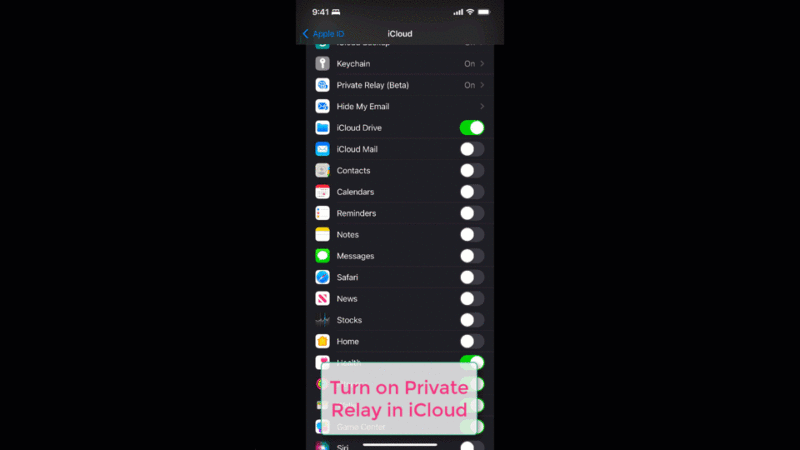
Apple’s not so private relay fails with WebRTC
Apple released iOS 15 with iCloud Private Relay broken for WebRTC – it still divulges your IP address. This post walks through why and how the WebRTC API’s use your IP address information and how you can check what IP addresses are gathered.
